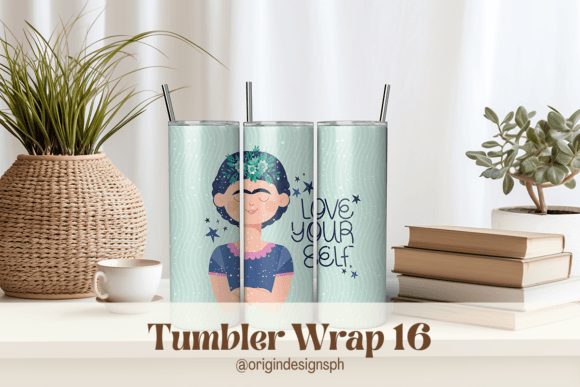
Tumbler Wrap 16: A Thoughtful Embroidery Review
First Impressions: Delicate, Draping, and Designed to Please
When I opened Tumbler Wrap 16 for the first time, what struck me wasn’t just its prettiness—it was how clearly it’s conceived for drape. Not flat, not rigid, but soft-flowing: a gentle curve with organic spacing, subtle negative space, and a rhythm that mimics how fabric naturally falls over a rounded surface. It reads as a machine embroidery design built for movement—not just visual appeal. As a designer who regularly sources digital embroidery files for client projects and small-batch handmade goods, I immediately pictured it on a linen tea towel folded over a ceramic mug, or stitched onto the curved front panel of a canvas tote bag. That’s where Tumbler Wrap 16 feels most authentic—not as a standalone graphic, but as part of a tactile, lived-in object.
Real-World Use: Where It Shines (and Where It Needs Care)
Last week, I tested Tumbler Wrap 16 on a custom embroidered apron for a local café owner. The design wrapped beautifully around the curved pocket—no puckering, no distortion—thanks to its balanced proportions and intentional stretch in the layout. It worked equally well on a lightweight cotton sweatshirt and a midweight baby onesie, both stabilized with tear-away and medium-weight cutaway respectively. In those contexts, Tumbler Wrap 16 elevated the handmade product without overwhelming it. Customers noticed it—not as “cute” decoration, but as thoughtful detail. That’s the difference between filler and finish.
That said, I’d hesitate to use Tumbler Wrap 16 on ultra-thin jersey or highly textured terry cloth without adjusting stitch density and stabilizer choice. Its graceful lines rely on clean stitch definition—so on dark fabric, I always test thread colors for contrast before committing. On caps or curved hats, I’d confirm hoop size compatibility first; the wrap’s gentle arc may need slight repositioning depending on cap curvature and embroidery arm clearance. And while it’s lovely on kitchen towels and pillow covers, I’d avoid placing it near high-friction seams or hems where dense fill stitch areas could wear faster.
Design Intelligence: What Makes It Work Beyond Aesthetics
Tumbler Wrap 16 doesn’t shout. It invites. That’s rare in the Crafts category, where many Graphics lean into bold outlines or heavy satin stitch. Instead, this design uses layered running stitch accents, open fill sections, and carefully weighted curves—giving it breathing room even at modest sizes. For an Etsy seller, that means better mockup versatility: it translates cleanly into printable mockups, digital previews, and lifestyle photos without looking pixelated or overworked. For a boutique brand, it supports consistency—whether stitched on a holiday gift set or a wedding favor pouch, it carries quiet cohesion.
I also appreciate how it avoids tiny lettering or micro-details that vanish under thread or fray after washing. No fragile stems, no needle-trap corners—just confident, stitch-smart construction. That builds customer trust. When someone pays for a personalized gift or custom apparel, they’re buying intention as much as execution. Tumbler Wrap 16 delivers that quietly.
Practical Designer Notes Before You Stitch
- Always test on scrap fabric first—especially if using textured, stretchy, or dark substrates. Observe how the drape holds up after trimming and washing.
- Review stitch density in your embroidery software. If it feels too heavy for lightweight baby items or delicate linens, consider reducing fill density by 5–10%.
- Confirm hoop size requirements. While Tumbler Wrap 16 is designed for wrapping, some machines may need a larger hoop than expected to accommodate its full curve comfortably.
- Inspect small details at actual stitch-out scale—not just on screen. Zoom in on vector previews to spot potential nesting issues or tight corners.
- Test black-and-white mockups alongside color versions. High-contrast readability matters for branding clarity, especially on small shop products or craft fair signage.
- Use proper stabilizer: medium cutaway for knits, tear-away for stable wovens, and optional topping for napped fabrics like fleece or terry.
- Check licensing terms before selling finished items or bundling Tumbler Wrap 16 into digital product packs. Commercial use isn’t automatic—even for embroidery project assets marketed to craft businesses.
Who Should Reach for Tumbler Wrap 16—And Why
This isn’t a one-size-fits-all applique design. It’s best for makers who value subtlety, repetition, and context-aware beauty. Think: the small shop product curator selecting designs for seasonal collections; the creative entrepreneur building a cohesive line of nursery decor; the craft fair vendor stitching personalized gifts that feel heirloom-worthy, not mass-produced. It’s ideal for holiday embroidery where warmth and softness matter more than sparkle—and perfect for commercial embroidery clients who want branded merchandise that breathes, rather than shouts.
I’ve used Tumbler Wrap 16 on embroidered patches for a local florist’s staff uniforms, on pillow covers for a boutique hotel’s guest rooms, and even adapted a simplified version for a baby embroidery sampler. Each time, it performed with quiet reliability—no re-hooping, no thread breaks, no customer complaints about stiffness or bulk. That’s the mark of a mature embroidery file: it serves the product, not the ego.
Final Thought: Pretty Is Easy. Purposeful Is Priceless
“Aesthetic” gets tossed around a lot in the craft business world—but Tumbler Wrap 16 proves aesthetics can be functional, too. It’s not just something that looks pretty on screen. It’s something that stitches cleanly, wears well, photographs honestly, and makes the end user pause—not because it’s loud, but because it feels *right*. Whether you’re an apparel decorator sourcing reliable design assets, an embroidered patch maker refining your catalog, or a hobbyist choosing their next finished product, let this be your reminder: the best embroidery designs don’t just decorate. They belong.