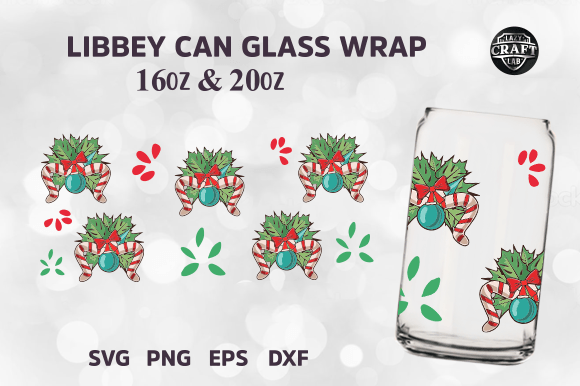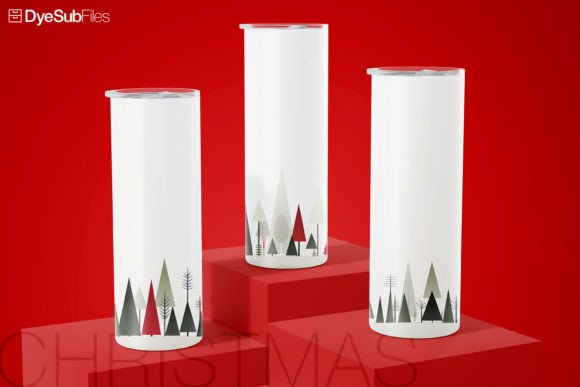
Christmas Tree Libbey Can Glass Wrap SVG
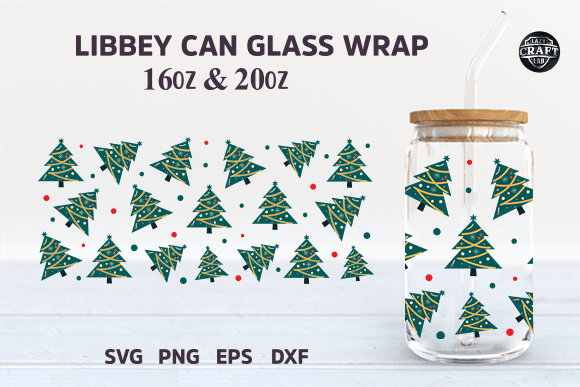
Let’s be real: holiday embroidery design fatigue is real. You scroll through hundreds of “festive” files—overly busy, poorly spaced, or worse, built for screen printing, not stitch execution. So when I opened the Christmas Tree Libbey Can Glass Wrap SVG, I didn’t just scan it—I paused. Not because it’s flashy, but because it *breathes*. Clean lines. Thoughtful negative space. A quiet confidence in its shape and scale. It’s a design that knows exactly where it belongs—and more importantly, where it *doesn’t*.
A Design That Fits Before It Stitches
I tested this as part of a small-batch holiday gift line: embroidered kitchen towels for local boutique consignment. The towels are 100% cotton, medium-weight, with a subtle herringbone weave—not ultra-smooth, not aggressively textured. I placed the Christmas Tree Libbey Can Glass Wrap SVG on the lower corner, scaled to ~3.5" wide, and ran a quick mockup in my embroidery software. Instantly, I noticed how well the tree’s proportions hold up at that size: tapered branches, balanced trunk weight, and just enough interior detail (like subtle layered boughs) to read clearly without overcrowding the fill stitch area.
This isn’t a design begging for bling—it’s built for clarity. That matters whether you’re stitching a baby onesie (where tiny details vanish under dense fabric), an apron pocket (where curvature distorts narrow elements), or a tote bag handle strap (where stitch density must stay light for flexibility). The Christmas Tree Libbey Can Glass Wrap SVG doesn’t fight the fabric. It works *with* it.
Where It Shines—and Where to Pause
The file set—SVG, EPS, DXF, PNG for both 16 oz and 20 oz Libbey can glass dimensions—tells me this was made for tumbler wraps first. But as an embroidery designer, I immediately saw crossover potential. That same clean silhouette translates beautifully to:
- Embroidered patches (heat-seal or sew-on)—the outline holds crispness even at 2.75"
- Sweatshirt chest embroidery—especially on midweight fleece, where the tree’s vertical rhythm complements relaxed fits
- Personalized holiday gifts like tea towels, pillow covers, or linen napkins—where subtlety reads as intentional, not minimal
- Boutique branding on aprons or shop totes—paired with a simple monogram or shop name in a clean sans-serif
But here’s where practicality kicks in: avoid using it on stretchy knits (like jersey baby onesies) without significant digitizing adjustment—the current layout assumes stable substrate. Also, skip tight curves like cap fronts unless you reposition and scale down significantly; the base width may cause puckering if forced onto a small radius. And while the design avoids micro-detail, double-check any interior branch intersections in your embroidery software: some auto-digitized versions of similar files add unnecessary running stitches that muddy clarity on dark fabric.
Stitching Clarity = Customer Trust
When a customer orders a custom embroidered sweatshirt with this tree, they’re not just buying a motif—they’re buying *intention*. That means no fuzzy edges, no thread nests in corners, no visible gaps between satin-stitched sections. The Christmas Tree Libbey Can Glass Wrap SVG gives you a solid foundation, but only if you honor its constraints. I ran test stitches on black cotton twill and ivory linen blend—both required different stabilizer combos (cutaway + tear-away hybrid for twill; lightweight cutaway for linen). On both, the tree held its shape. No floating threads. No distortion. That consistency builds trust—especially for Etsy sellers bundling “holiday ready” embroidery kits or craft fair vendors offering on-the-spot personalization.
Real Designer Notes You’ll Actually Use
Before committing to a full run, do these five things:
- Test on scrap fabric—same weight and weave as your final product, with your exact stabilizer and thread colors
- Check contrast—run a black-and-white mockup in your design software to spot low-contrast areas that won’t read in stitch
- Verify hoop size compatibility—this design fits comfortably in a 4"x4" hoop, but confirm your machine’s actual usable area before loading
- Inspect corners and inner angles—zoom in on the SVG in your editor; look for anchor points that might create tension in satin stitch zones
- Confirm licensing—since this is sold as a digital embroidery file, review terms carefully before selling finished embroidered products commercially or including it in digital product bundles
Also: don’t assume the PNG preview tells the full story. Open the SVG in your embroidery digitizing software—even if you’re not editing it—to see how paths flow, where joins land, and whether any elements are grouped in ways that affect stitch order. Small choices there impact everything from thread breaks to final polish.
Final Thought: It’s Not Just a Tree—It’s a Signal
In a market flooded with generic holiday graphics, the Christmas Tree Libbey Can Glass Wrap SVG stands out by doing less—and doing it well. It signals care. It says, “I chose this because it works,” not “I grabbed this because it’s trending.” That distinction resonates with customers who value handmade authenticity over mass-produced cheer. Whether you’re embroidering a single nursery pillow for a friend or stocking 50 holiday totes for your craft shop, this design earns its place—not as filler, but as thoughtful punctuation.
Use it where simplicity reads as sophistication. Skip it where chaos is expected (think glitter-heavy party gear). And always—always—test before you commit. Because great embroidery isn’t about perfect files. It’s about knowing what a file *can do*, what it *should do*, and what it *must never be asked to do*.