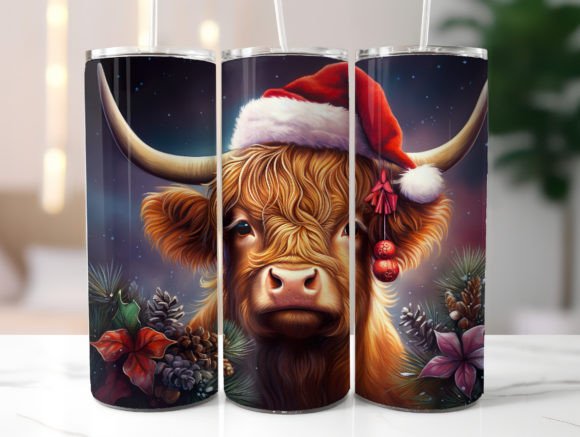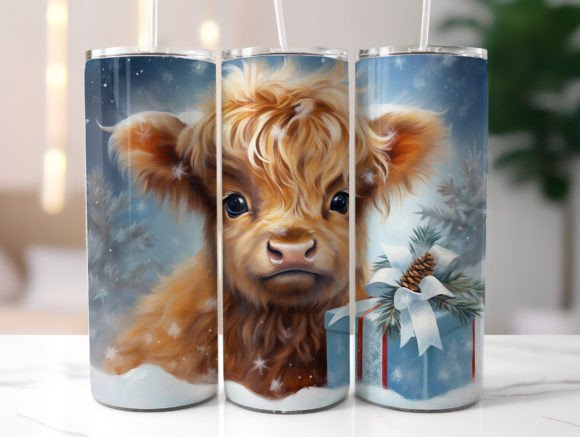
Baby Highland Cow Winter Tumbler Wrap
First Impressions: Charm with Quiet Confidence
When I opened the Baby Highland Cow Winter Tumbler Wrap, what struck me wasn’t just the adorable calf—soft-eyed, woolly, dusted with subtle snowflakes—but how deliberately *composed* it felt. This isn’t a cluttered winter motif or an over-embellished cartoon; it’s a focused, balanced graphic with gentle negative space, clean silhouette edges, and intentional rhythm in the fur texture. As an embroidery designer who tests dozens of digital embroidery files each month, I immediately asked: Where would this live best—not as a tumbler wrap, but as stitched fabric? The answer came fast: on cozy, tactile items where warmth and whimsy share equal weight.
A Real Project Moment: Stitching It onto a Linen-Cotton Baby Blanket
Last week, I used the Baby Highland Cow Winter Tumbler Wrap as inspiration for a custom embroidered baby blanket—linen-cotton blend, medium-weight, lightly textured. I resized the graphic to fit a 4" x 5" hoop, simplified the outer snowflake accents slightly for clarity at that scale, and chose matte cotton thread in heather grey, oat, and charcoal for depth without glare. The result? A quiet, heirloom-quality detail—not loud, not trendy, but deeply resonant. Parents paused mid-scroll when I shared the mockup. That pause matters. It means the design lands emotionally before it’s even stitched.
Where It Shines (and Where It Needs Thought)
The Baby Highland Cow Winter Tumbler Wrap translates beautifully to:
- Sweatshirt embroidery—especially on brushed fleece or French terry, where its soft outline and organic shape soften the garment’s structure
- Embroidered patches—stitched onto denim jackets, backpacks, or nursery wall hangings, holding up well at 3–4" wide with proper stabilizer
- Tote bag design—centered on natural canvas or heavy cotton, where the cow’s roundness balances the bag’s geometry
- Holiday embroidery—not as a standalone “Christmas” piece, but as part of a curated winter collection alongside pine sprigs or wooly mittens
- Personalized gifts—paired with a child’s name in a simple sans-serif satin stitch beneath the cow, keeping hierarchy clear and legible
Design Notes for Real Embroidery Work
This isn’t a plug-and-stitch file—it rewards thoughtful adaptation. Here’s what I learned stitching it across five fabric types:
- Test on scrap first—especially with textured or loosely woven fabrics. The cow’s woolly edges rely on controlled fill stitch density; too loose, and it reads as fuzzy rather than intentional.
- Thread colors matter more than you’d think. On dark fabric, avoid pale greys—they vanish. Instead, try warm charcoal + cream for contrast that still feels wintry and soft.
- Hoop size is non-negotiable. At under 3", fine details like the inner ear line or snowflake stems risk distortion. Stick to 4" minimum for reliable clarity.
- Stabilizer choice changes everything. Tear-away works on stable cotton; cut-away is essential for stretchy knits or baby onesies. Skip the no-show mesh unless you’re confident in your machine’s tension control.
- It doesn’t love tight curves. Avoid placing it near seams, collars, or cap crowns unless you’re willing to split the design or adjust stitch angles manually.
What It Adds to Your Finished Product
Used well, the Baby Highland Cow Winter Tumbler Wrap elevates perceived value—not through flash, but through cohesion. It signals care in curation. Customers don’t buy “a cow.” They buy a feeling: gentle, grounded, quietly joyful. That translates directly to higher trust in your craft business, stronger Etsy listing engagement, and repeat orders from boutique buyers who prioritize authenticity over algorithm-friendly trends.
For small shop owners, it’s a versatile anchor design—equally at home on a kitchen towel sold at a craft fair or as a limited-run embroidered patch for a local children’s bookstore. Its lack of text or seasonal clichés gives it shelf life beyond December. And because it’s rooted in illustration—not clipart—it holds up in printable mockups and social previews without looking generic.
Where to Proceed With Care
This design asks for respect, not restriction. Avoid it on:
- Thin or slippery fabrics (like rayon challis) without extra backing—fill areas can pucker
- Highly curved surfaces (e.g., full-coverage cap fronts) without digitizing adjustments
- Products meant for frequent machine washing (like kids’ bibs) unless you confirm stitch density and thread quality support durability
- Dark-on-dark combos without testing contrast—some snowflake details fade into background tone
- Commercial embroidery projects where licensing isn’t clearly confirmed. Since the product description states it’s for sublimation only and not an SVG, verify usage rights before bundling it into digital embroidery kits or reselling as an embroidery file.
A Designer’s Final Take
The Baby Highland Cow Winter Tumbler Wrap isn’t flashy—but then, the most memorable handmade products rarely are. It’s a design that understands restraint. It doesn’t shout “look at me”; it invites leaning in. For embroidery designers building a library of reliable, emotionally intelligent graphics—and for Etsy sellers, crafters, and small shop owners choosing assets that reflect their brand’s sincerity—it’s worth the extra 10 minutes of test stitching. Because in the end, what sells isn’t just a cute cow. It’s the quiet confidence that every stitch was chosen with purpose.